Securely modernize business-critical output management landscapes
Modernization and migration of complex output management environments – from legacy systems that have evolved over time to modern OpenText and cloud-native architectures. From analysis and target architecture to technical implementation, testing, go-live, and stabilization.
Assessment · Architecture · Migration · Testing · Go-Live


When established output landscapes become a transformation risk
Business-critical output management systems have often grown over many years. New platform strategies, SAP transformations, or technological dependencies make modernization necessary – while existing document processes must continue to run reliably.
Legacy platforms
Established StreamServe, Exstream, or other legacy environments are reaching their technological, operational, or strategic limits. At the same time, existing document processes must continue to run stably and be transferred to a future-proof platform in a controlled manner.
S/4HANA transformation
The transition to SAP S/4HANA changes interfaces, processes, and technical dependencies. Existing output solutions must be integrated into the target architecture at an early stage and reliably aligned with the new SAP landscape.
Fragmented template landscapes
Template libraries that have grown over the years often lead to redundancies, inconsistent standards, and high maintenance costs. Modernization creates the foundation for more consistent structures, simplified maintenance, and a controlled migration.
New platform strategy
Cloud-native approaches, new OpenText platforms, or changing architectural requirements make it necessary to realign existing output landscapes. A clear migration path that introduces new technologies without jeopardizing ongoing operations is crucial.
From initial assessment to stable go-live
We view modernization as an end-to-end transformation process, where architecture, migration, integration, and testing are considered together from the very start.
Structured assessment of the existing output landscape
We begin by analyzing the platforms, templates, document logic, integrations, and technical dependencies of the existing environment, while also incorporating relevant business and operational requirements.
This creates a solid foundation for realistically assessing complexity, dependencies, and migration needs, allowing for well-founded planning of the next steps.
Define target architecture and migration path
Based on the existing landscape, we develop a technical target vision for the future output management architecture, considering platform strategy, integrations, and relevant dependencies in tandem.
Building on this, we create a structured migration path that accounts for technical prerequisites, priorities, and logical implementation steps.
Controlled migration of systems, templates, and logic
Existing templates, document logic, and integrations are migrated to the new platform and adapted to meet the requirements of the target architecture.
Technical implementation follows the defined migration strategy, taking into account existing dependencies on adjacent systems and processes.
Validate migration and secure the transition
The migrated output landscape is validated both technically and functionally. Critical document processes, templates, and integrations are tested and prepared for the production launch.
etiam manages the go-live and provides support during the subsequent stabilization phase to ensure the new environment is transitioned into production in a controlled manner.
Legacy platforms
Existing StreamServe, Exstream, or other legacy environments are reaching their technological or strategic limits and need to be transitioned to a future-proof platform.
Legacy platforms
Existing StreamServe, Exstream, or other legacy environments are reaching their technological or strategic limits and need to be transitioned to a future-proof platform.

Experience across legacy and modern output platforms
Modernization projects require an understanding of both the existing environment and the target platform. etiam combines experience from established enterprise landscapes with the latest OpenText and SAP technologies.
OpenText Communications / Cloud Native
OpenText Exstream Classic
OpenText Exstream / StreamServe
SAP IS-U Application Forms / Print Workbench
A structured migration path instead of an isolated technology switch
Successful modernization considers not just the target technology, but the entire existing output landscape. From analysis, architecture, and migration through to go-live, we create a structured implementation path that makes technical dependencies manageable and secures ongoing operations.
Analyze
Understand existing platforms, templates, interfaces, dependencies, and operational requirements.
Define target state
Establish the target architecture, platform strategy, and technical framework for the future output landscape.
Plan migration
Prioritize migration objects, account for dependencies, and define a controllable implementation path.
Migrate & integrate
Transfer templates, logic, and interfaces to the target environment and integrate them into the existing enterprise architecture.
Validate & go live
Test document processes, validate technical and functional results, and support the go-live.
Stabilize
Secure the new environment after go-live and resolve any technical or operational issues that arise.
Migration does not end with the technical transfer
Business-critical output management systems have often evolved over many years. New platform strategies, SAP transformations, or technological dependencies make modernization necessary—all while existing document processes must continue to run reliably.
Migrate complex dependencies in a controlled manner
Business-critical output landscapes involve more than just individual templates or platform components. Document logic, integrations, peripheral systems, and existing processes must all be considered together during migration.
Clear migration steps, defined dependencies, and structured implementation provide the foundation for keeping changes under control and identifying risks early in the transformation.
Prepare the new environment for production
Production readiness does not start just before go-live. Testing and validation are integrated throughout the migration process to ensure that both technical and functional requirements are continuously verified.
This allows critical document processes, templates, and integrations to be validated before go-live, ensuring any outstanding issues are identified early.
Safeguard existing document processes during transformation
Business-critical document processes must remain reliable throughout any modernization. Existing operational requirements and technical dependencies are therefore integrated into the architecture and migration planning from the start.
The transition to the new platform is designed to account for both the target technical architecture and the continuity of all relevant output processes.
Support go-live and stabilize the new environment
Technical migration is only one part of the transformation. The go-live marks the transition from the project phase to a fully operational output management environment.
etiam manages the go-live process and provides support during the subsequent stabilization phase to analyze any technical or operational issues and ensure a reliable transition of the new environment into production.
Legacy platforms
Existing StreamServe, Exstream, or other legacy environments are reaching their technological or strategic limits and need to be transitioned to a future-proof platform.
Legacy platforms
Existing StreamServe, Exstream, or other legacy environments are reaching their technological or strategic limits and need to be transitioned to a future-proof platform.
Selected projects
Insights into the modernization of complex document and output management landscapes in regulated enterprise environments.

OpenText Communications / Cloud Native Migration
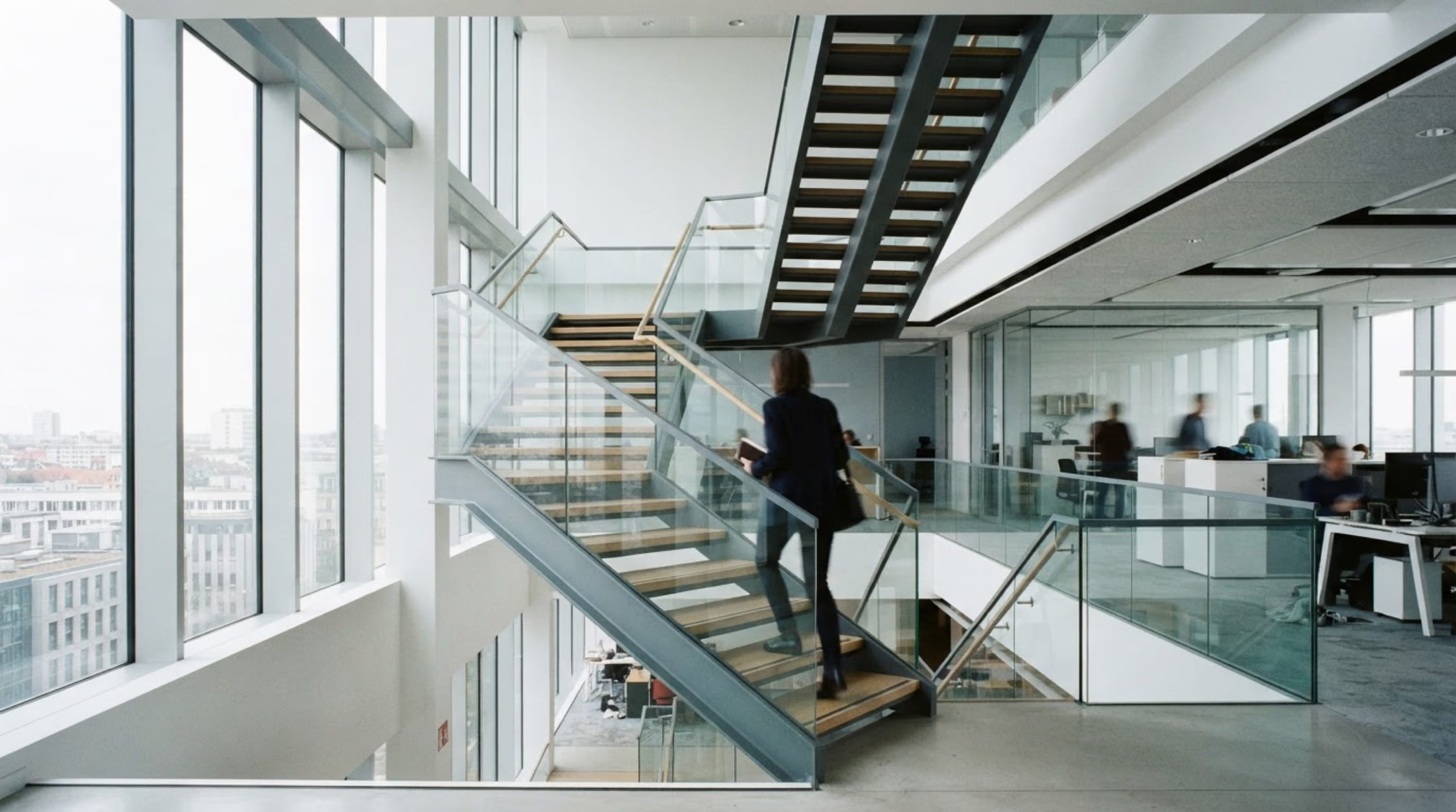
S/4HANA Output Management in the utility sector

From StreamServe to OpenText Exstream
Are you planning to modernize your output management landscape?
Whether it's a StreamServe migration, transitioning to a modern Customer Communications Cloud architecture, or output management as part of an S/4HANA transformation: let's discuss your existing environment, dependencies, and potential migration paths.
No obligation · Expert-focused · Direct access to a specialist